
Every fast-casual store I've walked has an opening checklist. Most also have a closing checklist. The ones that struggle aren't missing paper. They're missing a list the crew finishes when the line is slammed and the manager is on a call.
I ran Jersey Mike's locations and I run Blaze Pizza. The days the open went smooth weren't the days we had the longest laminated sheet. They were the days the list lived where the crew already was, and the closer knew the opener would see what got skipped.
Why paper and "the binder" fail on a real shift
A checklist fails for boring reasons:
- It's in the office. The work is on the line, in the walk-in, at the front counter.
- Nobody owns the last three items. "Deep clean the soda nozzles" becomes optional when the last guest won't leave.
- The opener never sees the closer's night. So the same miss repeats for a week.
- Multi-unit owners find out from a guest review. Not from a store that flagged it.
Crew don't hate checklists. They hate fake ones — the ones that exist for the auditor, not for the shift. The FDA's Food Code is the public playbook a lot of local health rules lean on; your brand standards sit on top of that. Software doesn't replace either. It just stops the "we initialed it" theater.
What belongs on an opening list (fast-casual)
Keep it short enough to finish before the door unlocks. Long lists teach people to initial without looking.
FOH open
- Floors, tables, and lobby walk — guest-ready, not "we mopped yesterday."
- Condiment / napkin / lid stations stocked for the first rush.
- POS and online-order tablet awake, printers tested, cash drawer counted if you use one.
- Music, lights, and lobby temperature set the way your brand standard says.
- Restroom check before the first guest, not after the first complaint.
BOH open
- Walk-in and reach-in temps logged.
- Prep levels vs. the day's forecast — not vs. "what we usually do."
- Protein / produce FIFO confirmed on the rail.
- Dish pit empty enough to start, not already buried from last night.
- Equipment on and safe: ovens, make line, dish machine.
If an item doesn't change the guest experience or food safety in the first two hours, it can live on a mid-shift or weekly deep-clean list instead.
What belongs on a closing list
Closing is where good stores protect tomorrow's open.
FOH close
- Dining room reset so the opener isn't doing last night's work.
- Trash and recycling out — lobby smell is a brand problem.
- Deposit / drawer done to your cash policy.
- Doors, lights, and alarm the same way every night.
- A two-line note for the opener: what broke, what ran out, who to call.
BOH close
- Make line broken down and cleaned to your standard, not "wiped."
- Walk-in organized; nothing left on the floor "for morning."
- Dish pit clear; soak pans labeled if they need time.
- Temps logged again if your procedure requires it.
- Tomorrow's thaw / prep pulled per the prep list.
The handoff note is the underrated item. A checklist without a handoff is how openers inherit mysteries — which is why shift handoff notes deserve their own habit, not a blank line at the bottom of a PDF.
Make checklists something managers love using
Here's the operator truth: managers love the tool that stops them from re-asking "did anyone do the nozzles?" ten times a week. Crew love the tool that makes the standard obvious and fair — same list for every closer, not whoever the GM likes.
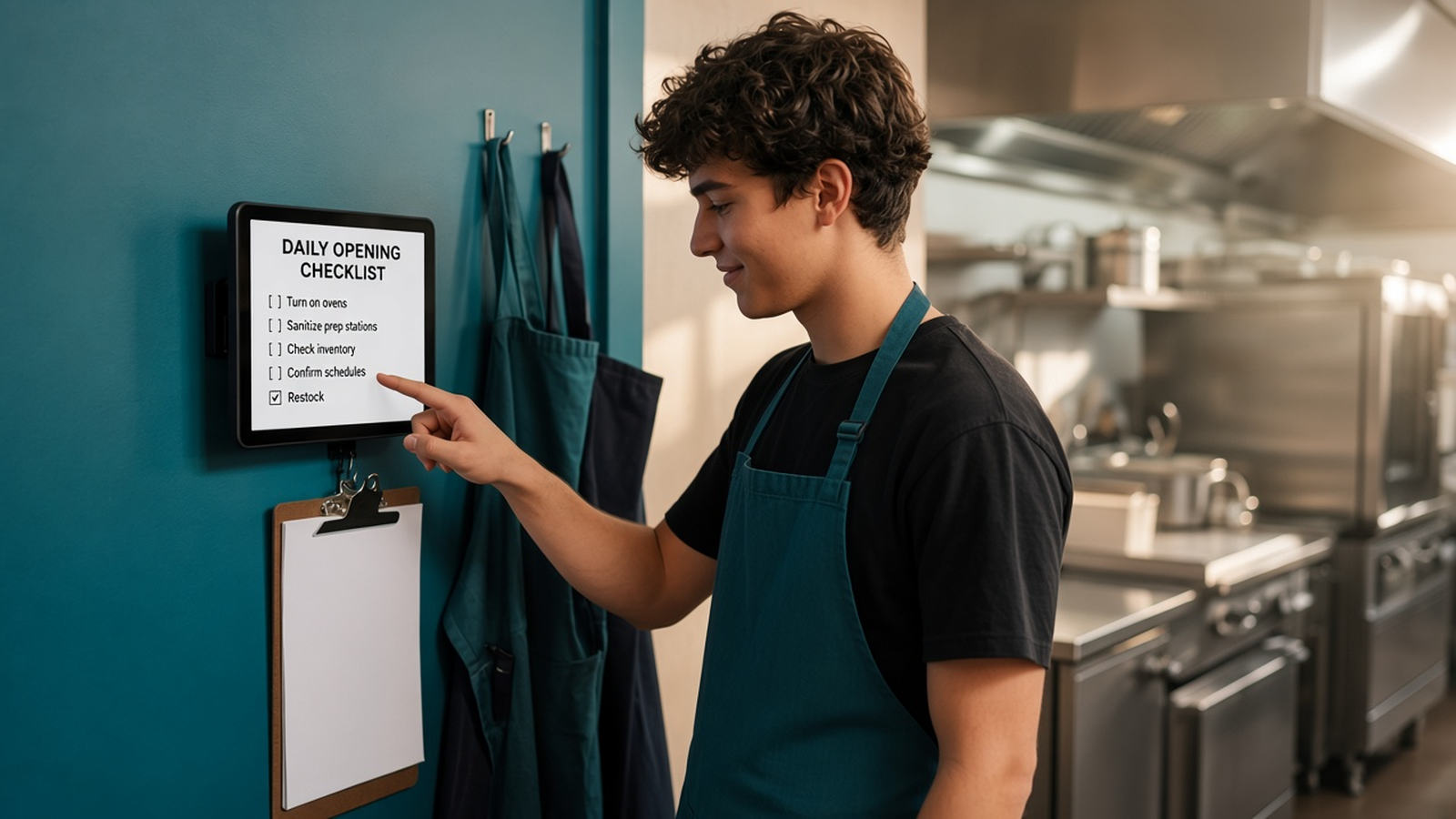
When daily checklists live next to the schedule and the time clock in CrooHQ, finishing the close isn't a separate app or a clipboard that walks home in someone's backpack. The opener sees what got done. The multi-unit owner can spot a store that's been skating without driving over — the same visibility problem as running three stores without living in your car.
Theo sits inside that same app. Managers already talk to him for late-night shift coverage and sales reads; keeping tasks in the same place means the shift tools feel like one habit, not five logins. That's why people keep using it — not because someone said "all your data is in one place," but because the open and close stop being a scavenger hunt.
And when the close is honest, Monday punch cleanup gets easier too. A store that finishes the night clean has fewer "who stayed late?" mysteries than one that papers over the shift — the same discipline behind keeping punches matched to the paycheck.
Boundaries that matter
CrooHQ is operations software. It does not replace payroll or QuickBooks. Checklists are for consistent daily work and manager visibility. They are not a food-safety certification, and they don't invent compliance for you. Your brand standards and local rules still own the "what." The software owns the "did it get done, and can the next shift see it."
More operator notes live on the CrooHQ blog. If your current close depends on memory and a binder nobody opens, bring that binder to a walkthrough. We'll map opening, mid-shift, and closing the way your stores actually run.
Built for operators, by operators.