

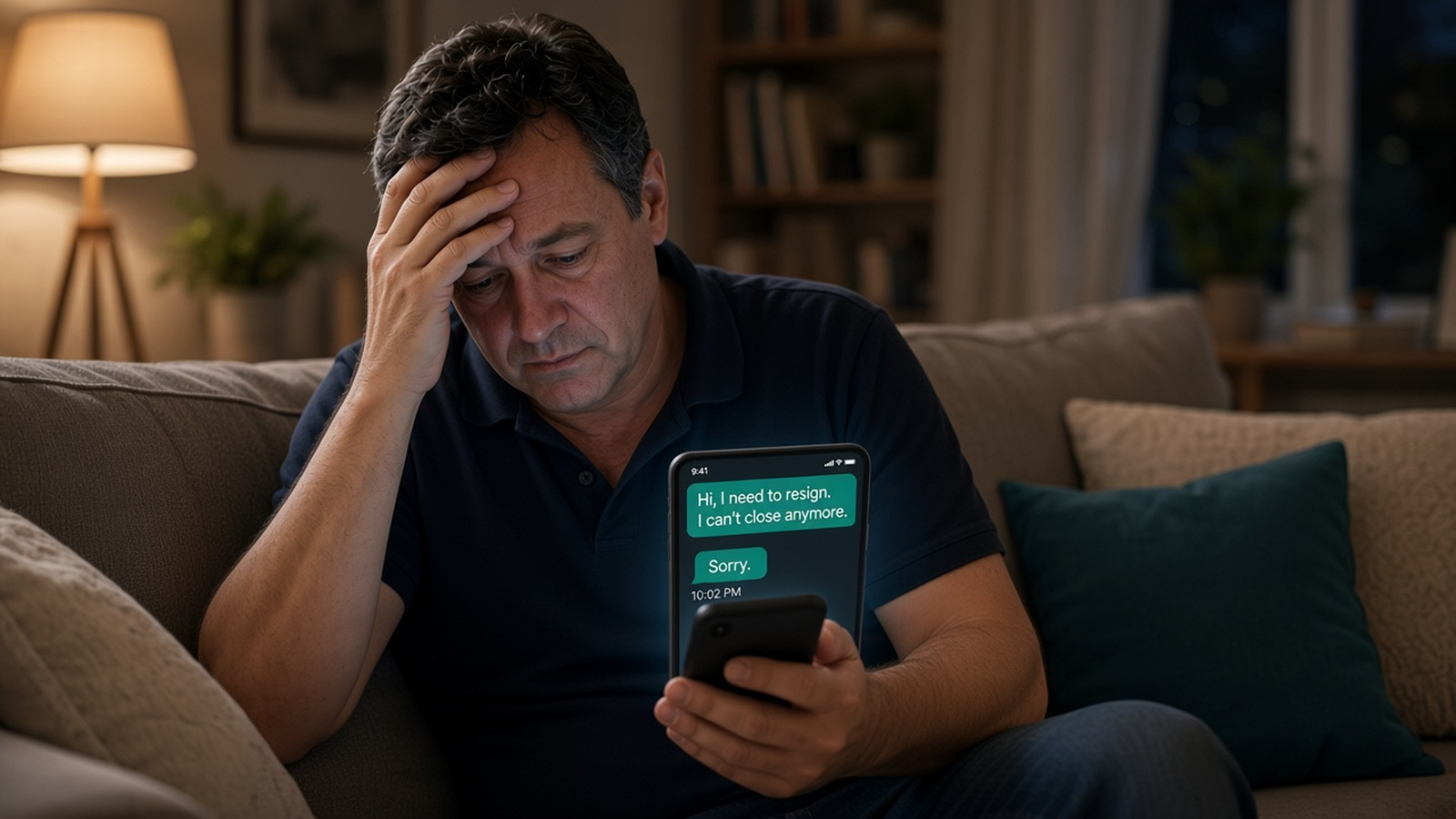
Your closer just quit. By text. At 10:02 PM.
You're already home. Dinner's done. The store is closed. And now you're staring at a phone that just dropped tomorrow's problem in your lap — or Saturday's, or both.
Funny how a lot of restaurant software gets built by folks who've never had that happen. We've had hundreds of those texts, because we've run multiple stores for years. The ones that hurt weren't the polite two-week notices. They were the 10 PM "hey I'm not coming in anymore" messages, sent when you can't walk the floor, can't see who's off, and can't tell who's already sitting on too many hours.
What usually happens next
If you're like most multi-unit operators I know, the late-night quit turns into a scramble the next morning:
- You text three people separately before coffee.
- Two don't answer. One says yes and is already at 36 hours.
- You don't realize that until payroll, or until they ask about overtime.
- The opening manager finds out from a crew member, not from you.
- Guests get a slower shift because the plan fell apart overnight.
None of that is laziness. It's that the schedule, the hours, and the people who want more shifts live in three different places, and you're the only bridge between them after 10 PM. When the real plan still lives in a muted thread, you get the same mess as when your schedule lives in a group text.
The difference between a rush call-out and a late-night quit
A call-out during dinner is a floor problem. You're short right now. A 10:02 PM quit is a planning problem. You still have hours before the next shift — if you use them.
That window is the whole game. The operators who stay calm overnight aren't tougher. They have a way to see who's available, who needs hours, and who shouldn't pick up another shift, without rebuilding the week from memory on a couch. Federal overtime rules under the Fair Labor Standards Act are why "first person who answers" is a bad coverage strategy: the reliable closer is often the one already drifting toward 40.
A late-night coverage playbook
You can do most of this with what you have today. The point is to stop inventing the process every time someone walks.
- Confirm the next shifts they owned. Not "they're gone." Which days, which dayparts, which stations. Write it down while it's fresh.
- Pull who's off and open. People who texted you last week wanting hours belong at the top — not whoever answers first.
- Check hours before you ask. Your most reliable closer is often the one closest to 40. Covering with them feels good tonight and costs you tomorrow.
- One clear ask, not a group-chat fog. "Need a closer Saturday 4–close. First yes gets it." Update the real schedule when someone takes it.
- Tell the opening manager before they walk in. A covered shift that nobody told the opener about is still a surprise — same failure mode as a weak shift handoff.
Where Theo fits — and why managers actually use him
This is the part I care about most, because it's why crews and managers stick with CrooHQ instead of treating it like another login.
Theo is the voice AI agent inside the app. You talk to him like a person. When a closer quits at 10:02, you can ask him to help cover the shift. He checks availability and looks for someone who needs those hours — and he keeps an eye on sales goals and labor while he's at it. He's not a chatbot that dumps a help article. He gets work done with your store's data. What Theo can actually do on a shift is the longer walkthrough; the short version is: coverage, punches, sales projections, slow-hour flags.
Managers like him because they stay on the couch instead of becoming a switchboard. Crew like the outcome because the people who want hours get asked first, not whoever happens to be awake. Owners like that the coverage decision isn't blind to overtime — especially when you're running three stores and can't be in all of them.
What this is not
CrooHQ doesn't replace your payroll provider or QuickBooks. It feeds them clean punches and a schedule that matches what actually happened. Theo doesn't invent people who aren't on your roster, and he doesn't "auto-hire" a closer. He works inside the crew and hours you already run. If Monday still turns into punch detective work after a scramble cover, start with when the punches don't match the paycheck.
If you want the full picture of how shift coverage, the time clock, and daily checklists sit together across locations, bring a real late-night quit story to a walkthrough. We'll walk it the way it hits your phone.
Built for operators, by operators.