

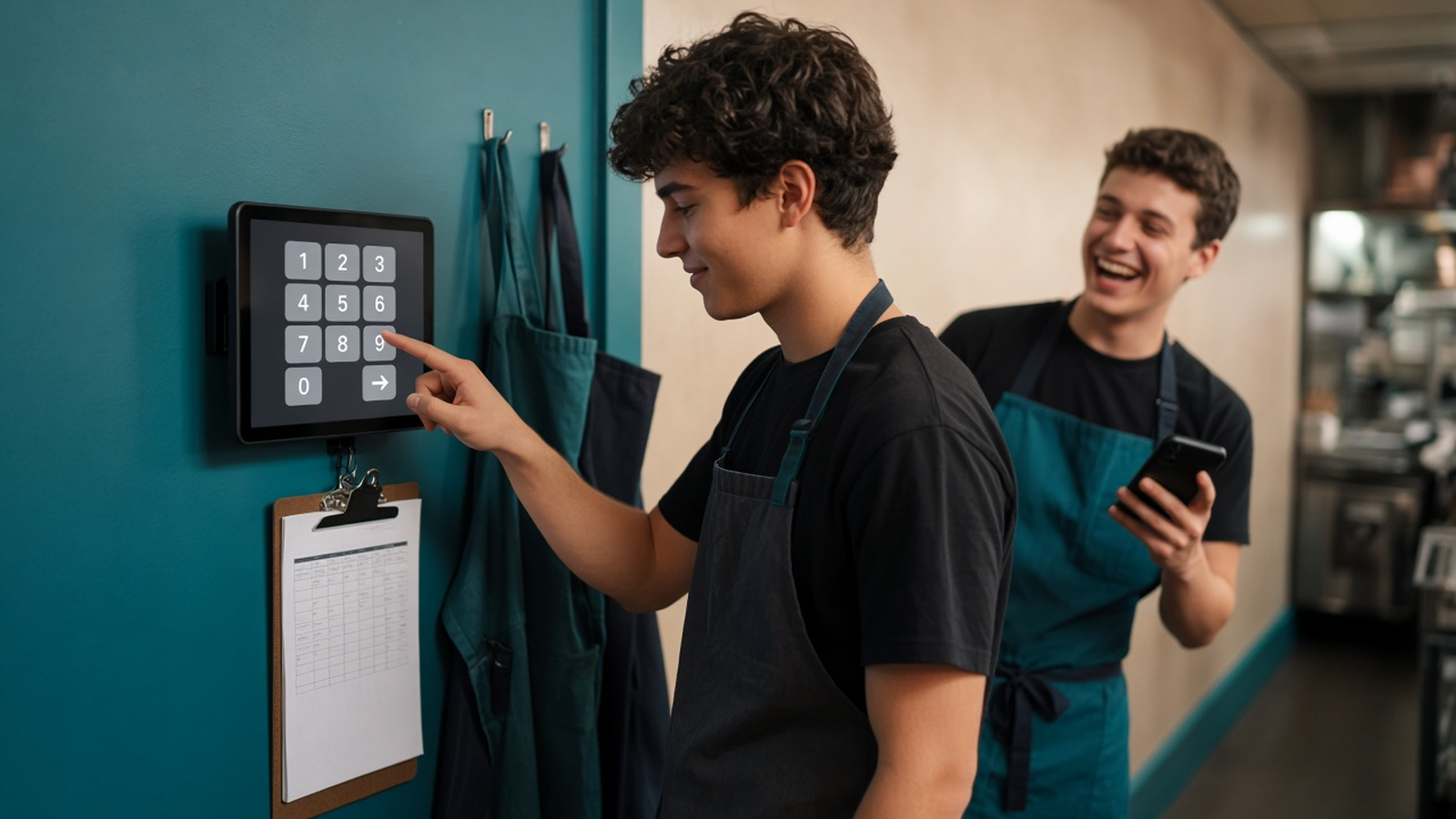
Here's how it usually goes. Your opener texts a buddy at 6:52: "running late, clock me in?" The buddy taps in the PIN, the clock says 7:00 on the dot, and the actual human walks through the back door at 7:25. Nobody thinks of it as stealing. It's a favor between friends.
But you're paying for those 25 minutes. And if it happens twice a week across a few people, it's real money and a real crack in how your store runs.
I ran four restaurant locations over 12 years. Buddy punching was never a crime wave in my stores. It was a habit that grew in the gaps. Here's how I learned to spot it and close those gaps without turning the back hallway into an interrogation room.
Why it happens (and why it's not about bad people)
Most buddy punching comes from good crew members with a bad morning. The bus was late. The kid wouldn't get in the car seat. They're scared of a write-up, so a friend covers for them.
That matters, because how you handle it depends on why it happens. If you treat it like theft, you lose people you wanted to keep. If you ignore it, you teach everyone that the clock is a suggestion. The goal is a system where covering for someone just isn't possible, and showing up late has a fair, known consequence.
The signs to look for
You won't catch it by staring at one punch. You catch it by noticing patterns. A few that should make you look twice:
- Back-to-back punches. Two people clock in within the same minute or two, and one of them is regularly late on days nobody else is around to see it.
- Perfect times from imperfect people. Someone who always arrives flustered somehow clocks in at exactly the scheduled minute, every time.
- The clock and the floor disagree. Your opening manager says Danny wasn't there until 7:30, but the clock says 7:01.
- Ghost breaks. A break gets punched in and out while the person is clearly still on the line, or missing from it.
- Same PIN, odd places. If your clock tracks which device or station a punch came from, a punch from a spot that person never works is worth a question.
None of these prove anything alone. They tell you where to ask.
How to stop it without poisoning the room
- Make PINs personal, and say why. Every crew member gets their own PIN, and sharing it is a written policy they sign at hire. Frame it around protecting them: their PIN is their paycheck record.
- Put the clock where a manager can see it. A time clock tucked in the back office invites favors. A clock by the line or the manager's station turns every punch into a public moment.
- Tie the clock to the schedule. When the clock knows who's supposed to be working, an early, late, or unscheduled punch gets flagged to the manager right then. That's the same fix that keeps your punches from fighting your payroll, and it makes covering for a friend a lot harder to hide.
- Have the shift lead confirm the crew. Ten seconds at the start of a shift: look at who's clocked in, look at who's standing there. If they don't match, fix it right then while everyone's in the room.
- Make late less scary than lying. If someone will be late, they text the manager, not a friend. The late gets recorded honestly, and they get a fair, known consequence. When the honest path is easier than the shortcut, most people take it.
When you catch it
Have a calm, private conversation. Show what the clock says and what actually happened. Ask what's going on. Most of the time you'll hear about a ride, a kid, or a second job, and you can solve that with a schedule change.
Correct the punch, write a short note on why it was edited, and remind them of the policy they signed. Save the hard line for repeat cases. The rest of the crew will hear about it either way, and what they'll take away is that the clock is fair and it's real.
The real payoff is trust
Clean punches aren't just about saving a few labor dollars. When the clock is honest, your labor numbers mean something, your schedules get tighter, and the crew members who always show up on time stop quietly resenting the ones who don't.
It also takes a job off your managers' plates. They stop playing detective and get back on the floor.
Why I built CrooHQ
That's why the CrooHQ time clock is a simple PIN pad that already knows the schedule. Every crew member has their own PIN, and the manager on shift sees an off-schedule punch while they can still walk over and fix it, not on Monday morning.
Built for operators, by operators.